


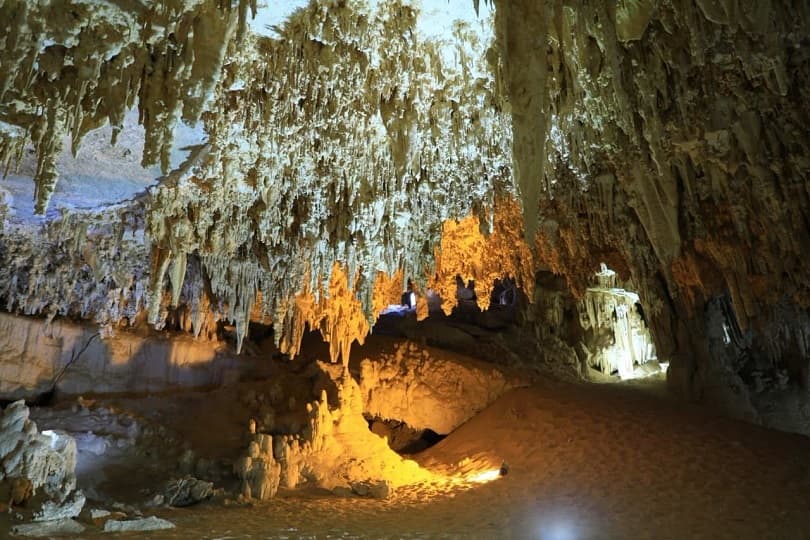
Underground is another world: stalactites and stalagmites formed over thousands of years, still lakes, and vast chambers whose light and silence stay with you. If you love adventure and nature, here are three caves in the Arab world worth adding to your travel list.
Al Hoota Cave, Oman
Al Hoota Cave lies near Al Hamra in Oman's Ad Dakhiliyah Governorate, at the foot of Jebel Shams, and is one of the best-known show caves in the region. Visits are by guided tour only, with a daily cap on visitors; you are taken from the visitor centre to the cave entrance before the tour continues on foot along prepared walkways.
Inside are striking rock formations and an underground lake. The cave welcomed more than 55,000 visitors in 2025, according to the Oman Observer, so book ahead and check opening hours before you go.
Jeita Grotto, Lebanon
Jeita Grotto sits in the Nahr al-Kalb valley, about 18 kilometres north of Beirut. It is made up of two connected limestone caves: an upper gallery you explore on foot among remarkable formations, and a lower cave you explore by boat on an underground river.
Check the grotto's status and opening hours on its official website before planning a visit.
Wadi Sannur Cave, Egypt
In Beni Suef Governorate, Wadi Sannur Cave holds alabaster formations, stalactites and stalagmites, and is a protected area. Because visits are limited to protect it, contact the protectorate or a licensed tour operator before planning a trip.
Fitting a cave into your trip
Al Hoota: a day trip from Muscat that can combine the cave with nearby Nizwa Fort and the road up Jebel Shams.
Jeita: half a day from Beirut, easily paired with the historic town of Byblos further up the coast.
Wadi Sannur: a day trip from Cairo with a licensed operator who handles permits and transport.
Tips before you go
Book ahead: especially in holidays and busy seasons, as some caves cap daily visitors.
Wear comfortable, non-slip shoes: paths can be damp.
Expect humidity: the air inside a cave differs from outside, so wear light, comfortable clothes.
Follow your guide's instructions: don't touch the formations; they grow very slowly and are damaged by hands.
Ask about photography: rules vary from site to site.
Plan your trip to Muscat, Beirut or Cairo, and book hotels and flights on TravelYalla.




Responses (0)